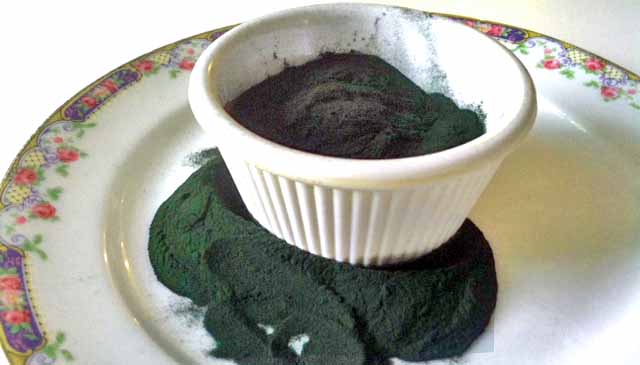
Dapat di internet.... Cer cuba

I don’t like using the term superfood, though it could certainly be applied to
Spirulina.
Though not technically an herb (actually an cyanobacteria), it boasts
its fair share of health promoting properties. It is rich in in
Chlorophyll, and like plants, gets its energy from the sun.
What is it?
Spirulina
is a natural “algae” (cyanbacteria) powder that is incredible high in
protein and nutrients. When harvested correctly from non-contaminated
ponds and bodies of water, it is one of the most potent nutrient sources
available. It is largely made up of protein and essential amino acids,
and I typically recommend it to clients who decide to remain vegetarian
for its high natural iron content. It is often touted for its high B-12
content, though there is a lot of debate about if this particular form
is a complete and absorbable form of B-12 and I don’t recommend it
completely in place of animal products.
The high concentration of protein and iron also makes it idea during
pregnancy, after surgery or anytime the immune system needs a boost.
Health Properties:
Though it does taste like pond scum,
Spirulina has some great health-boosting qualities:
- Spirulina is 65% protein and amino acids including the essential fatty acid gamma linolenic acid (GLA) which has gotten a lot of attention for its anti-inflammatory properties,
especially when taken with other quality Omega-3 supplements like
Fermented Cod Liver Oil. (I suspect that the benefits of GLA in
Spirulina are even more than what the studies have found since these
studies often use vegetable oils for their GLA source, and the other
inflammatory compounds in vegetable oils can interfere with the
anti-inflammatory ability.) It contains all essential amino acids.
- Spirulina contains Omega 3-,6 and 9s and is especially high in Omega-3s.
- Spirulina is extremely high in Chlorophyll, which helps remove toxins from the blood and boost the immune system.
- Spirulina has a very high concentration of bio-available iron and is excellent during pregnancy and for those with anemia and will not cause constipation.
- Spirulina is a great source of other nutrients
including (according to Wikipedia): “Spirulina contains vitamins
B-1(thiamine), B-2 (riboflavin), B-3(nicotinamide), B-6 (pyridoxine),
B-9 (folic acid), vitamin C, vitamin D, vitamin A and vitamin E. It is
also a source of potassium, calcium, chromium, copper, iron, magnesium,
manganese, phosphorus, selenium, sodium and zinc. Spirulina contains
many pigments which may be beneficial and bioavailable”
- This Spirulina (from Mountain Rose Herbs) was tested be an independent laboratory and found to have an ORAC (Oxygen Radical Absorbance Capacity) of over 24,000
which is 4x the ORAC score of blueberries. The ORAC score is generally
used to measure antioxidant ability and concentration in different
foods.
- Spirulina is also incredibly high in calcium with over 26 times the calcium in milk, making it excellent for children, the elderly and during pregnancy.
- Some research has suggested that Spirulina may be helpful in allergies and allergic reactions.
- Spirulina’s phosphorus content makes it helpful as part of a tooth remineralization regimen.
- Emerging evidence suggests that it binds with radioactive isotopes
and may be useful for radioactivity exposure or radiation therapy.
- The protein in Spirulina is highly usable and has a net protein utilization rate of between 50-61%
- Spirulina can bind with heavy metals in the body and help remove them.
- Spirulina can increase fat burning during exercise.
How To Take

When
choosing Spirulina, make sure to choose one that is organic, as others
can have nitrate compounds as additives. The best one I’ve found is
from
Mountain Rose Herbs
and it is also the cheapest organic Spirulina I’ve seen. It does taste
like pond water though, so many people prefer supplements. I’ve tried
Now Spirulina and found them to be good quality, though they are more expensive than the plain powder. (I haven’t tried
this brand, but it seems to be a great deal for 1,000 500mg capsules for under $30). You can also get
Spirulina powder in a 4-pound canister.
I always add
Spirulina to
my veggie smoothies each day
and take extra during pregnancy. It is best to get in about 2 teaspoons
per day, and 2 or more tablespoons during illness, after radiation
exposure or during pregnancy. It does taste horrible though! You can
also mix into water and drink straight, though many people have trouble
with this. The phosphorous makes it useful for the
tooth remineralizing regimen, and it is best taken with an Omega-3 source like
fermented cod liver oil. It’s anti-inflammatory properties have been helpful to some of my clients with joint pain or other types of inflammation.
Those with PKU should consult with a doctor before taking, as it does
contain that amino acid. Those on any type of anti-coagulation medicine
should consult with a doctor before beginning (or stopping) taking
Spirulina.
Ever taken Spirulina? What did you think of the taste? Will you try it now? Share below!
 1. Niat Ikhlas